


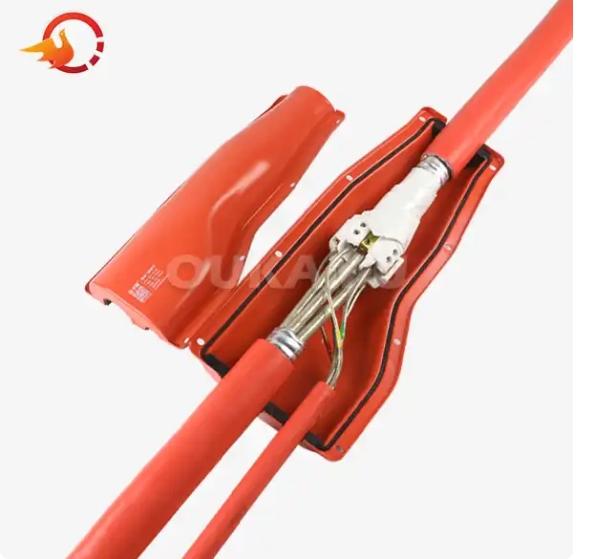
Armoured cable joints are essential components in electrical systems that protect cables from mechanical damage while ensuring efficient and safe power distribution. These joints are commonly used in environments that require robust protection, such as industrial plants, infrastructure projects, and even residential applications. However, as technology continues to evolve, so too does the design and functionality of armoured cable joints. From new materials to smarter solutions, the future of armoured cable joints looks promising. In this blog, OUKAMU will explore the emerging trends and technological advancements in armoured cable joints that are shaping the future of electrical infrastructure.
1. How Will Smart Technology Revolutionize Armoured Cable Joints?
In the era of smart grids and IoT (Internet of Things), cable joints are no longer just passive components—they are becoming part of a larger, interconnected system. The integration of smart technology into armoured cable joints could drastically change their functionality, making them more reliable, efficient, and self-monitoring.
Smart Monitoring and Diagnostics
One of the most promising advancements in armoured cable joints is the integration of smart sensors and diagnostic tools. These sensors can monitor various parameters such as temperature, humidity, voltage levels, and even mechanical stress. Through real-time data transmission, these smart cable joints can send alerts about potential issues like overheating or excessive tension, allowing maintenance teams to address problems before they lead to failure.
This proactive approach to cable maintenance could prevent costly downtimes, improve the lifespan of electrical systems, and increase the overall safety of installations. For example, power grid operators can remotely monitor cable joints in different parts of the network, identifying any weak points or signs of degradation without having to physically inspect each location.
Remote Troubleshooting
Smart cable joints also allow for remote troubleshooting. If a fault occurs, technicians can access diagnostic data remotely, potentially fixing the issue through a software update or recalibration without having to send a crew to the site. This feature is especially beneficial in remote or hard-to-reach areas where manual inspection could be costly and time-consuming.
Energy Efficiency
Smart armoured cable joints could contribute to energy efficiency by optimizing power distribution. By constantly monitoring the health of the cable joint and ensuring it operates within optimal parameters, these systems can help reduce power loss, increase operational efficiency, and lower energy costs. Over time, this technology can significantly reduce the carbon footprint of electrical systems.
2. What Materials Will Shape the Future of Armoured Cable Joints?
The materials used in armoured cable joints are crucial for their durability, safety, and performance. As industries continue to innovate, the next generation of armoured cable joints will likely incorporate new materials that offer better protection, lower environmental impact, and enhanced electrical performance.
Advanced Insulation Materials
One of the key materials being explored for future armoured cable joints is advanced insulation. New insulating materials, such as cross-linked polyethylene (XLPE) and ethylene propylene rubber (EPR), are designed to withstand extreme temperatures and electrical stress. These materials offer superior thermal resistance, which is essential for preventing overheating in high-voltage cables.
Furthermore, materials with enhanced electrical properties, such as high dielectric strength and improved resistance to electrical tracking, are being developed to increase the overall reliability and longevity of cable joints. These materials also ensure that electrical current flows smoothly without risk of leakage or arcing.
Corrosion-Resistant Alloys
For armoured cables used in harsh environments, such as offshore installations or industrial facilities, corrosion resistance is critical. The development of corrosion-resistant alloys and coatings for armoured cable joints is advancing rapidly. Materials like stainless steel, galvanised steel, and copper-nickel alloys are commonly used for armouring cables in highly corrosive environments.
Additionally, new coatings like anti-corrosion paints and nano-coatings are being used to provide an extra layer of protection against environmental factors, extending the lifespan of armoured cable joints. These advancements make armoured cables more reliable in environments with high moisture, salt, or chemicals, such as marine applications or chemical plants.
Lightweight and Flexible Materials
Another trend in armoured cable joints is the shift towards lighter and more flexible materials. While traditional armouring materials like steel are heavy and rigid, new composite materials are being developed to make cable joints both lightweight and flexible. This makes them easier to install and reduces the physical strain on workers during installation, especially in tight or complex spaces.
Moreover, flexible materials can also provide better resistance to mechanical stress, reducing the risk of joint failure due to vibration or movement in dynamic environments.
3. What Are the Key Benefits of Modular Cable Joint Systems?
Modular cable joint systems are gaining popularity due to their flexibility and ease of installation. These systems consist of pre-assembled components that can be easily combined to form a customized joint, making them a versatile solution for a variety of applications.
Faster Installation
One of the major benefits of modular cable joints is the speed at which they can be installed. Traditional cable jointing methods can be time-consuming, requiring skilled labor and multiple steps to ensure proper sealing and insulation. In contrast, modular systems are designed to be assembled quickly and with minimal training, making them ideal for projects where time is of the essence.
Modular systems also reduce the need for specialized tools, as the components typically snap or bolt together, simplifying the installation process and lowering labor costs.
Cost Efficiency
In addition to saving time, modular cable joints can also reduce overall project costs. Because these systems are pre-manufactured and standardized, they are often less expensive than custom-built joints. This cost-effectiveness is especially advantageous for large-scale infrastructure projects where multiple joints are required.
Moreover, the ease of maintenance and repair offered by modular systems means that future costs related to upkeep and replacement are also lower.
Customizable Solutions
Modular systems are highly customizable, allowing them to be tailored to specific requirements. Whether it’s a high-voltage joint for a power grid or a joint for a low-voltage application in residential buildings, modular systems can be configured to meet the needs of any project. This flexibility makes them ideal for use in diverse industries such as residential, commercial, industrial, and infrastructure applications.
4. What Role Will Sustainability Play in the Future of Armoured Cable Joints?
Sustainability is becoming an increasingly important factor in the development of all industrial technologies, and armoured cable joints are no exception. As industries face growing pressure to reduce their environmental impact, manufacturers are exploring ways to make armoured cable joints more sustainable without compromising on performance.
Eco-Friendly Materials
The shift towards eco-friendly materials is one of the most significant sustainability trends in armoured cable joint technology. Manufacturers are increasingly using recycled materials, such as recycled metals and plastics, to produce the components of cable joints. These materials not only help reduce waste but also lower the energy consumption involved in producing new materials.
Additionally, bio-based materials are being tested for use in the production of insulation and jacketing materials, replacing traditional petroleum-based options. These renewable materials could help reduce the overall carbon footprint of the manufacturing process.
Energy-Efficient Design
Beyond the materials used in production, the design of cable joints is also becoming more energy-efficient. As energy consumption becomes a greater concern, manufacturers are developing cable joints that reduce power loss, ensuring that electrical systems are more efficient overall.
Moreover, the use of renewable energy in the production process is also being explored. By using solar, wind, or other sustainable energy sources, manufacturers can reduce the carbon footprint of cable joint production, contributing to the global shift towards cleaner energy.
5. How Will Innovation in Branch Cable Technology Affect Armoured Cable Joints?
OUKAMU’s groundbreaking innovation in Branch Cable technology, which introduces a new way of connecting cables, is set to have a significant impact on the future of armoured cable joints. The Branch Cable system allows for seamless cable branching without the need for traditional splicing, which can be time-consuming and labor-intensive.
Faster and Easier Installation
Branch Cable technology eliminates the need for complex jointing procedures, allowing for faster and more efficient installations. This is particularly beneficial in infrastructure projects where time is a critical factor. By simplifying the installation process, Branch Cable systems help reduce labor costs and the risk of human error, ensuring a higher level of reliability in the final installation.
Greater Flexibility and Scalability
The Branch Cable system offers greater flexibility when it comes to expanding or modifying electrical networks. With this technology, it is easier to branch off cables in multiple directions without the need for extensive rewiring or cutting into existing cables. This flexibility makes it easier to adapt to changing power requirements in both residential and commercial settings.
Improved Safety and Reliability
Because Branch Cable systems reduce the need for physical connections and traditional jointing methods, they also reduce the risk of faults caused by improper installation. The technology ensures that connections are secure and reliable, making it an ideal solution for high-demand applications such as industrial plants and large-scale infrastructure projects.
Conclusion
The future of armoured cable joints is bright, driven by smart technology, new materials, and more sustainable practices. As industries continue to evolve, the need for reliable, durable, and cost-effective cable joint solutions will only increase. Innovations like Branch Cable technology and the growing trend towards modular and smart systems will transform the landscape of electrical infrastructure, ensuring safer, more efficient, and sustainable power distribution for years to come.
For more information on the latest advancements in cable joint technology, feel free to contact us at info@okmbranchcable.com. OUKAMU is at the forefront of this transformation with its exclusive Branch Cable technology, offering innovative solutions for various sectors, including infrastructure, residential, commercial, and industrial applications.
References:
- IEEE Xplore - Armoured Cable Joints: Advancements in Design and Technology.
- Cabling Innovation - The Future of Cable Joints: Materials and Technology.
- Wiring Products - How Smart Technology Will Revolutionize Electrical Systems.

 English
 French
 Spanish
 Portuguese
 Deutsch
 Turkish
 Dutch
Dutch
 Italiano
 Russian
 Romaian
 Portuguese (Brazil)
 Greek
Greek