


Introduction
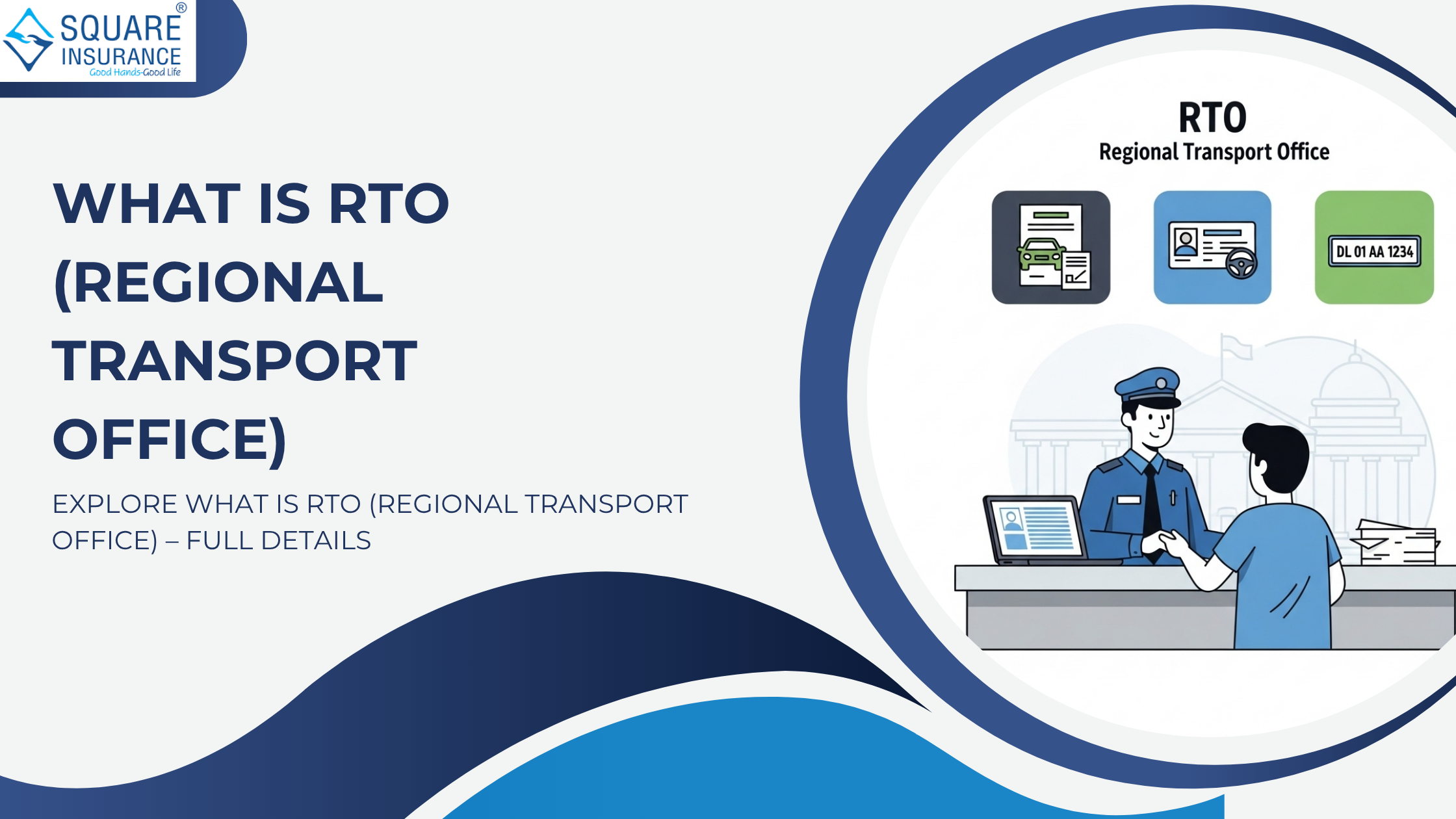
For car registration and driving license maintenance on Indian roads, there's a single authority ahead of all others, and that is the Regional Transport Office (RTO). What is RTO (Regional Transport Office)? It is an official government agency tasked with enforcing the Motor Vehicles Act, 1988, and making sure all drivers and vehicles adhere to the transport laws of the country.
There are a number of RTOs for each of India's states and union territories, all operating in the system of the Motor Vehicles Act, 1988. These offices play a crucial role in ensuring smooth, legal, and safe transportation operations in India.
This blog gives you total information on the RTO, its definition, duties, services, significance, and online features, so you can have a better idea of how the system functions and how to utilize it effectively.
What is RTO (Regional Transport Office)?
The Regional Transport Office (RTO), also known as the Regional Transport Authority (RTA), is a government agency tasked with overseeing all transport-related services and regulatory functions within a given region.
The RTO works under the State Transport Department and inspects for adherence to road safety regulations, environmental regulations, and taxation policies. Every vehicle owner or driver in India will have to deal with the RTO at some stage, whether for vehicle registration, issue of license, or vehicle fitness certification.
Key Objectives of RTO
The RTO is not merely an authority for registering vehicles, it is a key player in ensuring road discipline and safety. Its primary aims are:
- Enforcement of Motor Vehicle Acts – Ensuring compliance with the Motor Vehicles Act, 1988, and connected rules.
- Maintaining Road Safety – Issuing driving licenses only to qualified drivers and keeping roadworthiness records.
- Vehicle Record Handling – Maintaining current databases of registered vehicles, ownership changes, and insurance coverage.
- Control over Pollution Levels – Maintaining the vehicles within emission standards by conducting periodic fitness checks.
- Collection of Tax and Fees – Collecting road tax, green tax, and other transport charges as may be applicable.
Principal Functions of RTO
The roles of the RTO are multifarious and indispensable for having an organized transport system. Following are the primary functions:
1. Vehicle Registration and Number Plates
All cars in India need to be registered with the local RTO prior to being run on public roads. The RTO issues:
- Permanent registration numbers (license plates)
- Temporary registration numbers (newly bought cars)
- Vehicle ownership transfer certificates
- Duplicate registration certificates (in the event of loss or damage)
2. Issue of Driving License
The RTO is tasked with:
- Carrying out driving tests
- Issuing learner's, permanent, and international driving licenses
- Renewing invalid licenses
- Adding or deleting vehicle classes in the driving license
Every applicant for a license is required to fulfill eligibility criteria and qualify through theoretical and practical driving tests for competency and road safety.
3. Vehicle Inspection and Fitness Certification
Transport and commercial vehicles are to be inspected at regular intervals at RTO centers to check if they are fit in terms of safety and emission. The RTO provides Fitness Certificates (FC) upon successful inspection.
4. Road Tax Collection
The RTO levies road tax, a state levy depending on the vehicle's type, weight, and usage. The tax goes towards road maintenance and construction initiatives.
5. Enforcement of Pollution Control
The RTO checks that all vehicles meet the emission standards under the Pollution Under Control (PUC) certification scheme. This reduces environmental pollution and upholds clean air levels.
6. Grant of Permit
For commercial and transport vehicles, the RTO grants different kinds of permits including:
- Goods carriage permit
- Passenger vehicle permit
- National and tourist permits
These permits specify areas and terms on which commercial vehicles are allowed to operate.
Documents Issued by RTO
The RTO issues some important documents to drivers and owners of vehicles including:
- Registration Certificate (RC)
- Driving License (DL)
- Learner's License (LL)
- Vehicle Fitness Certificate
- Pollution Under Control (PUC) Certificate
- Road Permits
- No Objection Certificate (NOC)
- Ownership Transfer Certificate
These records not only confirm ownership and driving fitness but also make them essential for insurance claims, resale, and inter-state travel.
Online RTO Services in India
As digital governance continues to evolve, most RTO services are available online through websites like Parivahan Sewa (initiated by the Ministry of Road Transport and Highways).
Some of the important services available online are:
- Applying for a new driving license or learner's license
- Vehicle registration status check
- License renewal and duplicate issuance
- Payment of road tax
- PUC certificate status check
- Booking an appointment for RTO services
All this has transformed in the digital era, becoming faster, more transparent, and user-friendly, minimizing long queues and paperwork.
Role of RTO in Everyday Life
RTO impacts nearly every driver and vehicle owner in India. Here's how it influences their lives:
- Legal Compliance: RTO makes sure vehicles and drivers drive legally according to government regulations.
- Road Safety: By examining and authenticating driving skills, RTO minimizes accidents.
- Environmental Protection: It regulates motor vehicle emissions by providing or requiring PUC certification.
- Proof of Vehicle Ownership: Registration certificates are the official documents of ownership.
- Revenue from Taxation: The road tax is used to finance infrastructure and road building.
Overall, the RTO is the lifeline of India's road transport administration system.
How to Reach Your Local RTO
Every RTO office is controlled by its corresponding State Transport Department. You can find your local RTO by looking at:
- Your vehicle registration number (the first few alphabets indicate the RTO code, i.e., MH12 for Pune)
- State Transport Department websites for contact information, office hours, and online services
Carry all the documents that are needed like proof of identity, address, invoice of the vehicle, and insurance documents for hassle-free processing when you go to an RTO office.
Advice for Handling RTO Processes Efficiently
- Book online appointments whenever feasible to eliminate waiting time.
- Have documents up-to-date—lapsed insurance or PUC certificates can cause delays.
- Utilize authorized intermediaries or agents sparingly and always ensure they are authentic.
- Keep digital copies of all RTO documents easily available.
- Update yourself on new RTO rules and road safety legislation through official government websites.
Conclusion
The Regional Transport Office (RTO) plays a crucial role as a bridge connecting citizens to the road transport system, keeping every vehicle and driver legally and safety compliant. From applying for a license to renewing registration or checking your vehicle's fitness, RTO services are essential to ensuring a legal and safe driving experience.
But being a responsible car owner also entails safeguarding your car and yourself with the right insurance cover. That's where Square Insurance is in the picture.
Square Insurance provides complete vehicle insurance policies to protect you from financial loss arising from accidents, theft, or third-party claims. With an easy-to-use platform, clear pricing, and professional advice, Square Insurance facilitates ease of compliance with RTO rules while ensuring that you remain safe on the road.
Be compliant, be secure, with Square Insurance.".

 English
 French
 Spanish
 Portuguese
 Deutsch
 Turkish
 Dutch
Dutch
 Italiano
 Russian
 Romaian
 Portuguese (Brazil)
 Greek
Greek