


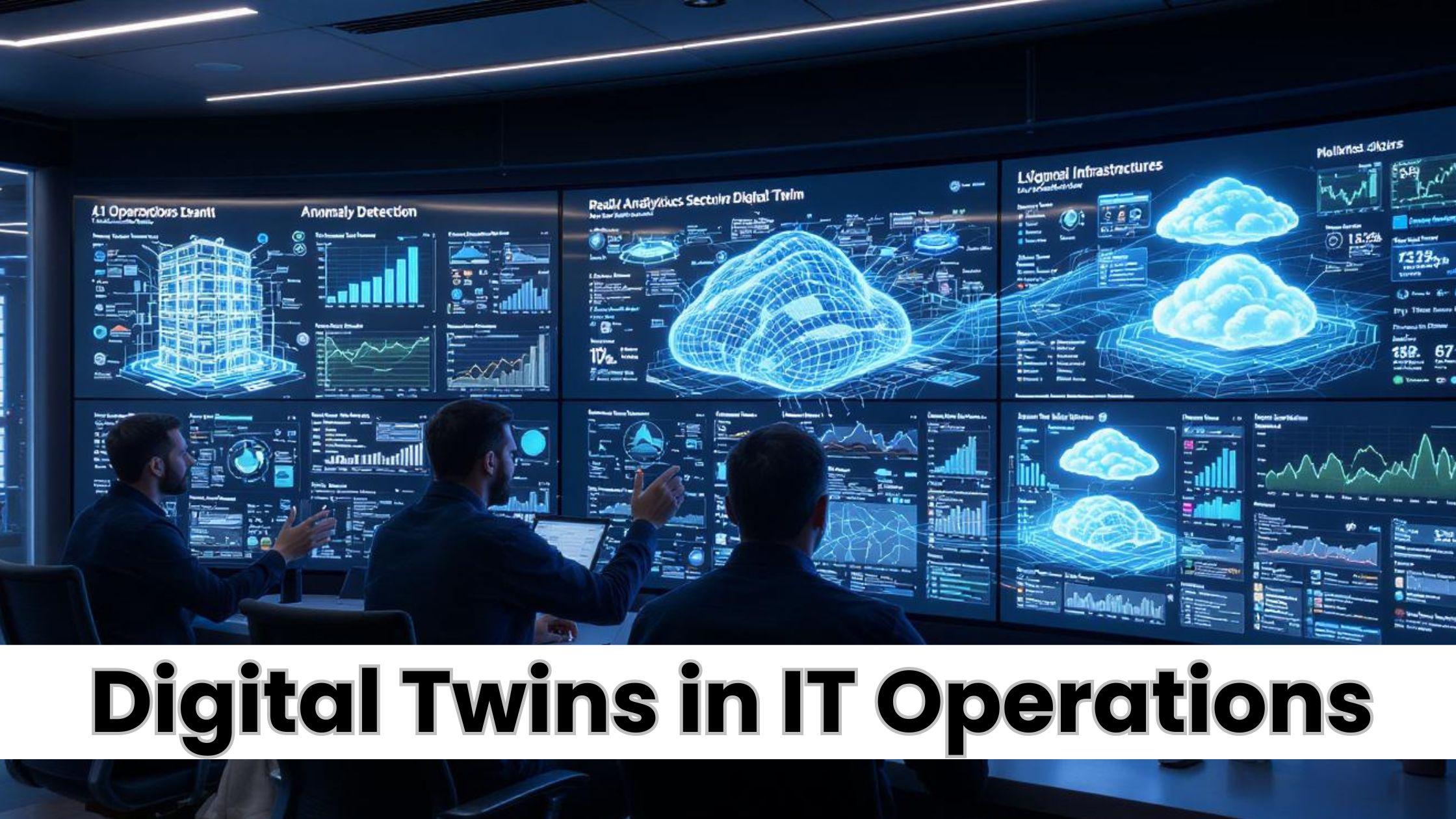
In the modern enterprise landscape, IT Operations are evolving at a pace that few could have predicted a decade ago. Among the myriad technologies reshaping the operational backbone of organizations, digital twins stand out as a silent yet transformative force. Traditionally associated with manufacturing and engineering, digital twins—virtual replicas of physical systems—are now becoming indispensable in IT operations. By providing real-time simulations of infrastructure, applications, and workflows, digital twins enable IT teams to anticipate challenges, optimize performance, and proactively mitigate risks. This paradigm shift is quietly but decisively changing the way IT operations are managed across enterprises worldwide.
Simulation and Proactive Management
Digital twins operate by mirroring the actual environment in a digital format, allowing IT teams to test scenarios without impacting live systems. This capability reduces downtime, accelerates problem-solving, and enhances decision-making efficiency. For instance, when an organization faces a potential system overload, a digital twin can simulate the effect of traffic surges and recommend preemptive actions. This proactive approach contrasts sharply with traditional reactive IT management, where issues are often addressed only after they have disrupted operations. The result is not just improved operational resilience but also cost savings and a higher quality of service.
Enhanced Monitoring and Analytics
The integration of digital twins into IT operations also enhances monitoring and analytics capabilities. By continuously collecting and analyzing data from various IT assets, digital twins provide a holistic view of system health and performance. IT teams can identify patterns, predict failures, and optimize resource allocation with unprecedented precision. The predictive capabilities of digital twins are particularly valuable in complex hybrid environments, where traditional monitoring tools may struggle to provide actionable insights. As organizations increasingly adopt cloud and edge computing architectures, the importance of these predictive models becomes even more pronounced.
Optimizing Capacity Planning and Scalability
Another significant impact of digital twins on IT operations is in capacity planning and scalability. Traditional methods often rely on historical data and static models to estimate resource needs, which can lead to over-provisioning or under-utilization. Digital twins, on the other hand, allow IT teams to simulate multiple scaling scenarios in real time, evaluating the effects on performance, cost, and risk. This level of foresight helps organizations make more informed decisions, ensuring resources are optimally allocated and systems are prepared to handle future demands.
Automation and Efficiency Gains
Automation is also a key area where digital twins are making a difference. By integrating with AI and machine learning tools, digital twins can not only predict issues but also automate corrective actions. For example, if a digital twin detects potential network congestion, it can trigger automated load-balancing measures to prevent service degradation. Such capabilities reduce the burden on IT staff, allowing them to focus on strategic initiatives rather than routine maintenance tasks. Over time, this leads to a more agile and responsive IT environment, capable of adapting quickly to changing business needs.
Strengthening Security and Compliance
Security is another domain where digital twins are proving invaluable. IT operations face constant threats from cyberattacks, and traditional security measures often rely on reactive monitoring. Digital twins enable proactive threat modeling and testing, simulating potential attack scenarios to identify vulnerabilities before they are exploited. This not only strengthens the organization’s security posture but also improves compliance with regulatory standards, as IT teams can demonstrate the effectiveness of preventive measures and risk mitigation strategies.
Collaborative IT Service Management
Moreover, digital twins are reshaping IT service management by providing a platform for collaboration and visualization. Complex IT environments often involve multiple stakeholders, from system administrators to business leaders. Digital twins offer a shared, interactive model of the IT ecosystem, allowing teams to understand dependencies, visualize impacts, and make collaborative decisions. This transparency fosters better communication, reduces errors, and enhances overall operational efficiency.
Incident Response and Problem Resolution
The adoption of digital twins in IT operations is also driving innovation in incident response and problem resolution. Traditional troubleshooting often involves time-consuming manual investigations, with limited visibility into system interactions. Digital twins provide a virtual sandbox for experimentation, enabling IT teams to reproduce issues, test solutions, and implement fixes with minimal risk to live systems. This accelerates resolution times and minimizes operational disruption, ensuring that organizations maintain high levels of availability and service continuity.
Strategic IT Planning with Digital Twins
In addition to operational benefits, digital twins are contributing to strategic IT planning. By simulating future scenarios, organizations can evaluate the impact of new technologies, infrastructure upgrades, and business initiatives before implementation. This forward-looking approach reduces the likelihood of costly mistakes and supports informed investment decisions. For CIOs and IT leaders, digital twins offer a powerful tool for aligning IT operations with broader business objectives, driving both efficiency and innovation.
Adoption Across Organizations of All Sizes
The influence of digital twins is extending beyond large enterprises into mid-sized organizations as well. As technology becomes more accessible and cost-effective, even smaller IT teams can leverage digital twins to enhance operational insight, improve service delivery, and reduce risks. Cloud-based digital twin platforms further democratize access, eliminating the need for significant on-premises infrastructure while still providing sophisticated modeling capabilities. This widespread adoption underscores the transformative potential of digital twins across diverse sectors and organizational sizes.
Implementation Challenges and Considerations
Despite their many advantages, integrating digital twins into IT operations requires careful planning and expertise. Organizations must consider data quality, integration with existing tools, and scalability of the digital twin model. Additionally, IT teams need to develop skills in simulation, modeling, and analytics to fully harness the benefits of digital twins. Partnering with technology providers and leveraging industry best practices can help ensure successful implementation and long-term value creation.
Driving the Future of IT Operations
Digital twins are quietly revolutionizing IT operations by offering predictive insights, enhancing security, automating responses, and enabling strategic planning. Their ability to mirror complex IT environments and simulate diverse scenarios provides a level of operational intelligence that was previously unattainable. As organizations continue to navigate increasingly complex IT landscapes, digital twins will play a pivotal role in shaping the future of IT operations, driving efficiency, resilience, and innovation across enterprises of all sizes.
Read Full Article : https://bizinfopro.com/blogs/it-blogs/how-digital-twins-are-quietly-disrupting-it-operations/
About Us : BizInfoPro is a modern business publication designed to inform, inspire, and empower decision-makers, entrepreneurs, and forward-thinking professionals. With a focus on practical insights and in‑depth analysis, it explores the evolving landscape of global business—covering emerging markets, industry innovations, strategic growth opportunities, and actionable content that supports smarter decision‑making.

 English
 Arabic
 French
 Spanish
 Portuguese
 Deutsch
 Turkish
 Dutch
Dutch
 Italiano
 Russian
 Romaian
 Greek
Greek