


What Is API Integration in Web Development? Explained for Business Owners
Modern businesses depend on websites that do more than just display information. Customers expect real-time updates, smooth transactions, and personalised services. This is where API Integration in Web Development comes into play. APIs allow different systems to communicate, enabling your website to connect with tools like payment gateways, CRMs, or logistics platforms. For a business owner, understanding how APIs work is vital because they directly influence efficiency, customer satisfaction, and business growth.
What is API Integration in Web Development?
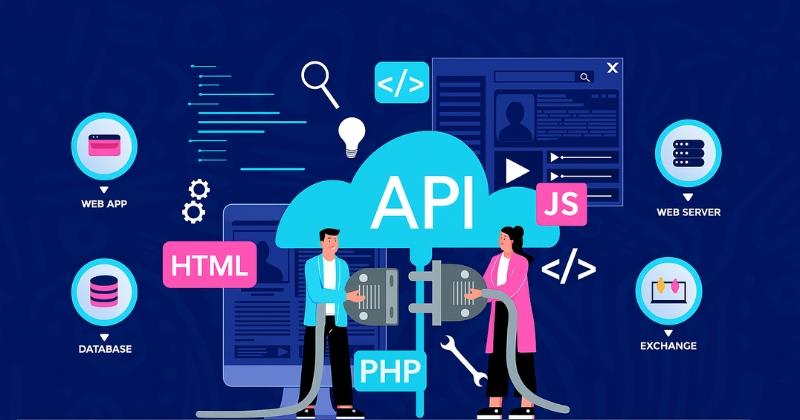
An API, or Application Programming Interface, acts like a bridge between two systems. It allows them to exchange information without manual effort. API Integration in Web Development means connecting your website with external software or applications so that processes are automated.
Examples you might recognise:
An e-commerce site connecting to Razorpay or PayPal for payments.
A retail site showing stock levels updated in real time.
A service business linking its website with Zoho CRM for better customer management.
Without APIs, these processes would require constant manual input, which slows down operations and increases errors.
Why API Integration Matters for Business Owners
For business owners in India, APIs are more than a technical feature they are a necessity. Here’s why:
Time Efficiency
Manual updates consume resources. APIs automate tasks such as order confirmation, stock updates, or invoice generation.
Accuracy
Human errors in data entry are common. APIs reduce mistakes by syncing data across platforms.
Scalability
As your business grows, APIs make it possible to connect with more platforms without rebuilding your website.
Customer Experience
Customers today expect instant services. APIs allow real-time responses like payment confirmation, delivery tracking, and product availability.
Common Business Problems APIs Solve
APIs directly address some of the biggest pain points business owners face:
Slow Processes: Manual updates drag operations. APIs automate them.
Disconnected Systems: Accounting software, CRM, and websites often fail to communicate. APIs connect them.
Demand for Real-Time Updates: Customers want live order tracking, payment confirmation, and booking details. APIs deliver that.
Difficulty Managing Multiple Platforms: APIs centralise information across different tools, reducing workload.
Benefits of API Integration in Web Development
Integrating APIs into your website brings wide-ranging benefits.
Better User Experience
Customers can track orders, make secure payments, and access real-time updates.
Lower Operational Costs
Automation reduces the need for manual labour and extra staffing.
Stronger Decision-Making
APIs connect analytics tools, giving accurate insights into sales and customer behaviour.
Flexibility in Adopting New Tools
As technology evolves, APIs allow businesses to integrate without redesigning the website.
Faster Development
Instead of building every function from scratch, APIs provide ready-made services.
Improved Security
Well-designed APIs add extra security layers by controlling how data is accessed and transferred.
Types of APIs Commonly Used by Businesses
Different industries use different APIs based on their needs. Some popular categories include:
Payment APIs: PayPal, Razorpay, Stripe.
Social Media APIs: Instagram, Facebook, LinkedIn.
Maps and Location APIs: Google Maps for navigation and delivery tracking.
Communication APIs: WhatsApp Business, Twilio for SMS and email.
E-commerce APIs: Inventory, product management, and order tracking.
Healthcare APIs: Online booking and patient record integration.
Banking APIs: Financial data sharing for faster transactions.
How API Integration Works in Website Development
The process may look technical but follows a clear structure:
Identify Requirements – Decide what integration is necessary (e.g., payments, CRM).
Select the Right API – Choose from available APIs that match business needs.
Connect and Configure – Developers link the API with the website and adjust settings.
Testing Phase – Verify that data flows correctly between systems.
Monitoring and Maintenance – Regular checks prevent downtime and security risks.
Professional partners like Site Invention, a trusted website development company in Mumbai, manage this process smoothly.
Conclusion
API Integration in Web Development is no longer optional for businesses aiming to grow in a competitive market. It ensures efficiency, real-time updates, and secure operations, while also keeping customers satisfied. For Indian businesses, partnering with an experienced website development company in Mumbai like Site Invention can simplify the process and deliver long-term results.
Modern businesses depend on websites that do more than just display information. Customers expect real-time updates, smooth transactions, and personalised services. This is where API Integration in Web Development comes into play. APIs allow different systems to communicate, enabling your website to connect with tools like payment gateways, CRMs, or logistics platforms. For a business owner, understanding how APIs work is vital because they directly influence efficiency, customer satisfaction, and business growth.
What is API Integration in Web Development?
An API, or Application Programming Interface, acts like a bridge between two systems. It allows them to exchange information without manual effort. API Integration in Web Development means connecting your website with external software or applications so that processes are automated.
Examples you might recognise:
An e-commerce site connecting to Razorpay or PayPal for payments.
A retail site showing stock levels updated in real time.
A service business linking its website with Zoho CRM for better customer management.
Without APIs, these processes would require constant manual input, which slows down operations and increases errors.
Why API Integration Matters for Business Owners
For business owners in India, APIs are more than a technical feature they are a necessity. Here’s why:
Time Efficiency
Manual updates consume resources. APIs automate tasks such as order confirmation, stock updates, or invoice generation.
Accuracy
Human errors in data entry are common. APIs reduce mistakes by syncing data across platforms.
Scalability
As your business grows, APIs make it possible to connect with more platforms without rebuilding your website.
Customer Experience
Customers today expect instant services. APIs allow real-time responses like payment confirmation, delivery tracking, and product availability.
Common Business Problems APIs Solve
APIs directly address some of the biggest pain points business owners face:
Slow Processes: Manual updates drag operations. APIs automate them.
Disconnected Systems: Accounting software, CRM, and websites often fail to communicate. APIs connect them.
Demand for Real-Time Updates: Customers want live order tracking, payment confirmation, and booking details. APIs deliver that.
Difficulty Managing Multiple Platforms: APIs centralise information across different tools, reducing workload.
Benefits of API Integration in Web Development
Integrating APIs into your website brings wide-ranging benefits.
Better User Experience
Customers can track orders, make secure payments, and access real-time updates.
Lower Operational Costs
Automation reduces the need for manual labour and extra staffing.
Stronger Decision-Making
APIs connect analytics tools, giving accurate insights into sales and customer behaviour.
Flexibility in Adopting New Tools
As technology evolves, APIs allow businesses to integrate without redesigning the website.
Faster Development
Instead of building every function from scratch, APIs provide ready-made services.
Improved Security
Well-designed APIs add extra security layers by controlling how data is accessed and transferred.
Types of APIs Commonly Used by Businesses
Different industries use different APIs based on their needs. Some popular categories include:
Payment APIs: PayPal, Razorpay, Stripe.
Social Media APIs: Instagram, Facebook, LinkedIn.
Maps and Location APIs: Google Maps for navigation and delivery tracking.
Communication APIs: WhatsApp Business, Twilio for SMS and email.
E-commerce APIs: Inventory, product management, and order tracking.
Healthcare APIs: Online booking and patient record integration.
Banking APIs: Financial data sharing for faster transactions.
How API Integration Works in Website Development
The process may look technical but follows a clear structure:
Identify Requirements – Decide what integration is necessary (e.g., payments, CRM).
Select the Right API – Choose from available APIs that match business needs.
Connect and Configure – Developers link the API with the website and adjust settings.
Testing Phase – Verify that data flows correctly between systems.
Monitoring and Maintenance – Regular checks prevent downtime and security risks.
Professional partners like Site Invention, a trusted website development company in Mumbai, manage this process smoothly.
Conclusion
API Integration in Web Development is no longer optional for businesses aiming to grow in a competitive market. It ensures efficiency, real-time updates, and secure operations, while also keeping customers satisfied. For Indian businesses, partnering with an experienced website development company in Mumbai like Site Invention can simplify the process and deliver long-term results.
What Is API Integration in Web Development? Explained for Business Owners
Modern businesses depend on websites that do more than just display information. Customers expect real-time updates, smooth transactions, and personalised services. This is where API Integration in Web Development comes into play. APIs allow different systems to communicate, enabling your website to connect with tools like payment gateways, CRMs, or logistics platforms. For a business owner, understanding how APIs work is vital because they directly influence efficiency, customer satisfaction, and business growth.
What is API Integration in Web Development?
An API, or Application Programming Interface, acts like a bridge between two systems. It allows them to exchange information without manual effort. API Integration in Web Development means connecting your website with external software or applications so that processes are automated.
Examples you might recognise:
An e-commerce site connecting to Razorpay or PayPal for payments.
A retail site showing stock levels updated in real time.
A service business linking its website with Zoho CRM for better customer management.
Without APIs, these processes would require constant manual input, which slows down operations and increases errors.
Why API Integration Matters for Business Owners
For business owners in India, APIs are more than a technical feature they are a necessity. Here’s why:
Time Efficiency
Manual updates consume resources. APIs automate tasks such as order confirmation, stock updates, or invoice generation.
Accuracy
Human errors in data entry are common. APIs reduce mistakes by syncing data across platforms.
Scalability
As your business grows, APIs make it possible to connect with more platforms without rebuilding your website.
Customer Experience
Customers today expect instant services. APIs allow real-time responses like payment confirmation, delivery tracking, and product availability.
Common Business Problems APIs Solve
APIs directly address some of the biggest pain points business owners face:
Slow Processes: Manual updates drag operations. APIs automate them.
Disconnected Systems: Accounting software, CRM, and websites often fail to communicate. APIs connect them.
Demand for Real-Time Updates: Customers want live order tracking, payment confirmation, and booking details. APIs deliver that.
Difficulty Managing Multiple Platforms: APIs centralise information across different tools, reducing workload.
Benefits of API Integration in Web Development
Integrating APIs into your website brings wide-ranging benefits.
Better User Experience
Customers can track orders, make secure payments, and access real-time updates.
Lower Operational Costs
Automation reduces the need for manual labour and extra staffing.
Stronger Decision-Making
APIs connect analytics tools, giving accurate insights into sales and customer behaviour.
Flexibility in Adopting New Tools
As technology evolves, APIs allow businesses to integrate without redesigning the website.
Faster Development
Instead of building every function from scratch, APIs provide ready-made services.
Improved Security
Well-designed APIs add extra security layers by controlling how data is accessed and transferred.
Types of APIs Commonly Used by Businesses
Different industries use different APIs based on their needs. Some popular categories include:
Payment APIs: PayPal, Razorpay, Stripe.
Social Media APIs: Instagram, Facebook, LinkedIn.
Maps and Location APIs: Google Maps for navigation and delivery tracking.
Communication APIs: WhatsApp Business, Twilio for SMS and email.
E-commerce APIs: Inventory, product management, and order tracking.
Healthcare APIs: Online booking and patient record integration.
Banking APIs: Financial data sharing for faster transactions.
How API Integration Works in Website Development
The process may look technical but follows a clear structure:
Identify Requirements – Decide what integration is necessary (e.g., payments, CRM).
Select the Right API – Choose from available APIs that match business needs.
Connect and Configure – Developers link the API with the website and adjust settings.
Testing Phase – Verify that data flows correctly between systems.
Monitoring and Maintenance – Regular checks prevent downtime and security risks.
Professional partners like Site Invention, a trusted website development company in Mumbai, manage this process smoothly.
Conclusion
API Integration in Web Development is no longer optional for businesses aiming to grow in a competitive market. It ensures efficiency, real-time updates, and secure operations, while also keeping customers satisfied. For Indian businesses, partnering with an experienced website development company in Mumbai like Site Invention can simplify the process and deliver long-term results.
0 Yorumlar
0 hisse senetleri
893 Views
0 önizleme

 English
 Arabic
 French
 Spanish
 Portuguese
 Deutsch
 Dutch
Dutch
 Italiano
 Russian
 Romaian
 Portuguese (Brazil)
 Greek
Greek