


In the modern global marketplace, the speed of commerce often dictates the success of a business, as the velocity at which products travel from a manufacturer to a consumer can define brand loyalty and operational success. As supply chains grow increasingly complex and consumer expectations for rapid, "next-day" delivery continue to reach unprecedented levels, logistics managers find themselves caught in a perpetual balancing act. They must carefully weigh the significant trade-offs between speed and cost, a process that requires a sophisticated understanding of how each transportation mode integrates into a broader, more resilient operational strategy.
Professional freight forwarding services play an indispensable role in this high-stakes decision-making process. By acting as the primary bridge between shippers and various carriers, these experts help companies navigate the intricate challenges of transit times, rigid budget constraints, and the unique handling requirements of different cargo types. Whether a business is moving high-value consumer electronics or thousands of pounds of heavy industrial equipment, a deep comprehension of the fundamental differences between air and sea transport is essential for maintaining a competitive edge in a globalized economy.
The Strategic Role of Air Freight
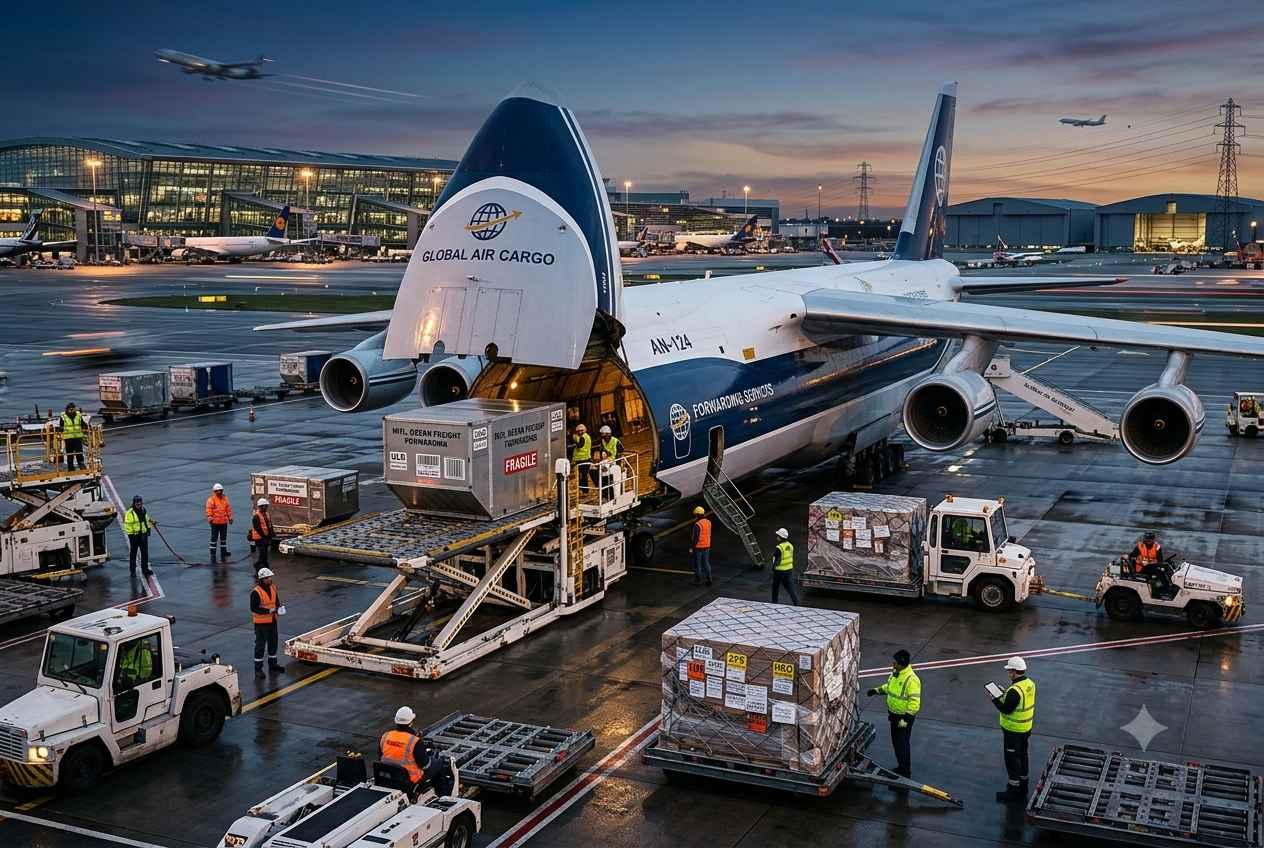
Air freight is widely regarded by industry professionals as the gold standard for speed and reliability, serving as the backbone for industries where time is the most critical asset. When a business deals with perishable goods, high-fashion items subject to fleeting trends, or urgent replacement parts that keep a factory line running, air transport offers an unmatched ability to move goods across continents in a matter of days.
According to Google, air freight is defined as the transportation of goods by aircraft. This method utilizes either dedicated cargo planes or the under-deck cargo holds of commercial passenger flights to achieve rapid transit. Because of its incredible speed, air transport significantly reduces the amount of time inventory spends in motion, which allows businesses to maintain leaner safety stock levels and respond more dynamically to shifting market demands or sudden surges in consumer interest.
Key Benefits of Air Transport
-
Drastically Reduced Lead Times: Because products reach their final destination in a matter of days rather than weeks, businesses can enjoy much faster inventory turnover, which improves cash flow and reduces the capital tied up in transit.
-
Enhanced Security Protocols: Airports and aviation facilities generally maintain much stricter security, surveillance, and monitoring protocols compared to maritime ports, which significantly reduces the probability of pilferage, unauthorized access, or transit-related damage.
-
Predictability and Scheduling: Airlines typically operate on more rigid, consistent flight schedules than shipping lines, making it much easier for supply chain managers to plan for specific delivery windows and communicate accurate arrival times to their clients.
However, these benefits come at a substantial premium. Air freight is priced based on a calculation known as chargeable weight, which carefully considers both the actual weight of the shipment and its physical volume. This makes it a prohibitively costly choice for heavy, bulky, or low-value items where the profit margin cannot absorb the shipping cost. For many global companies, air transport is best reserved for high-value products where the cost of a delay would far outweigh the initial investment in transportation.
Navigating International Ocean Freight Forwarding
While air transport functions as the agile sprinter of the logistics world, international ocean freight forwarding acts as the reliable, heavy-duty lifter. It remains the most common, reliable, and cost-effective method for moving massive volumes of goods across the globe, providing the essential infrastructure that supports large-scale global trade. By consolidating thousands of tons of cargo into standardized containers, companies can benefit from immense economies of scale that are simply not possible through other modes of transport.
Forbes highlights that freight forwarding is an incredibly complex field, requiring expert coordination to manage the labyrinth of customs clearance, international documentation, and long-term carrier relationships. When shipping via ocean, your dedicated freight forwarder will navigate the nuances of Full Container Load (FCL) shipments, where you rent an entire container, or Less than Container Load (LCL) shipments, where your cargo shares space with others to optimize both costs and logistics.
Why Ocean Freight Remains Essential
-
Unmatched Cost-Effectiveness: For heavy, dense, or massive shipments, the price per kilogram is a mere fraction of what you would pay for air freight, making it the only viable option for many retailers and wholesalers.
-
Superior Scalability: Massive ocean vessels can transport thousands of containers at once, providing the necessary capacity for global retailers and manufacturers who deal with high-volume replenishment cycles.
-
Commitment to Sustainability: Per unit of cargo moved, ships generally generate significantly lower carbon emissions compared to the heavy fuel consumption of cargo aircraft. As businesses face increasing pressure to report on their environmental impact and corporate social responsibility, the lower carbon footprint of sea freight has become a major factor in sustainable supply chain design.
Despite these significant advantages, ocean transit is inherently slower and more susceptible to external disruptions such as port congestion, adverse weather conditions, or global scheduling volatility. Relying solely on ocean freight requires a much longer-term planning horizon and a robust, data-driven inventory management system to prevent stockouts during unexpected transit delays.
Optimizing Your Supply Chain in 2026
The global logistics landscape in 2026 demands a higher level of agility and technological integration than ever before. As noted in Google News, the industry is currently undergoing a structural shift away from purely efficiency-driven models toward a model that prioritizes overall resilience and risk mitigation. Modern supply chains are increasingly becoming "multimodal," meaning they leverage the distinct strengths of both air and ocean transport to create a more balanced, risk-averse strategy.
Developing a Hybrid Approach
Many successful international businesses are now adopting a tiered, hybrid strategy:
-
Base Demand via Ocean: Ship the majority of your recurring, stable inventory through ocean freight to capitalize on lower costs and predictable, long-term shipping cycles.
-
Strategic Air Buffer: Reserve a portion of your budget for air capacity specifically for seasonal demand spikes, high-priority product launches, or emergency replenishment when an ocean shipment faces an unexpected delay.
-
Real-Time Visibility: Utilize modern, technology-driven freight forwarding services that provide end-to-end digital tracking. Having total visibility into exactly where your cargo is located allows for proactive decision-making when disruptions occur at major maritime ports or international airports.
This hybrid model allows companies to maintain healthy profit margins by utilizing cheaper sea freight for the bulk of their goods, while simultaneously retaining the operational flexibility to protect their brand’s reputation through fast, reliable air shipping when the situation requires it.
Conclusion: Making the Right Choice for Your Cargo
Selecting between air and ocean transport is not merely a logistical task or a simple booking request; it is a fundamental business decision that directly impacts your company's cash flow, customer satisfaction, and overall market competitiveness. While air transport provides the rapid speed and enhanced security required for high-value or highly time-sensitive inventory, international ocean freight forwarding provides the essential volume and cost-efficiency necessary for large-scale, sustainable operations.
The most effective and resilient supply chains are those that remain inherently flexible. By building strong, collaborative partnerships with experienced freight forwarding services, you gain access to the deep expertise required to navigate complex global trade regulations, optimize your shipping routes for efficiency, and anticipate potential bottlenecks before they impact your delivery schedule.

 English
 Arabic
 French
 Spanish
 Portuguese
 Deutsch
 Turkish
 Dutch
Dutch
 Italiano
 Russian
 Romaian
 Greek
Greek